
Terms & Conditions
This website uses cookies to enhance your browsing experience and provide you with personalized services. By continuing to use this site, you consent to the use of cookies. See our Terms of Engagement to learn more.
70 West Madison Street, Suite 1500, Chicago, Illinois 60602

June 24th, 2025
eitadmin
Categories: IP BLAWG
Here’s What Happened:
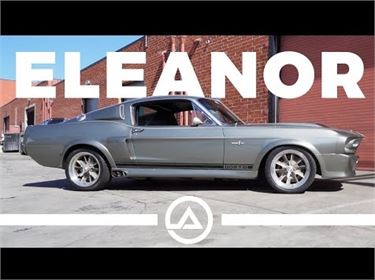
Denice Halicki, widow of Gone in 60 Seconds creator H.B. Halicki, sued Carroll Shelby Licensing and others for allegedly infringing her claimed copyright in Eleanor, the car. In many of the Gone in 60 Seconds movies, a car named Eleanor would appear. In the original 1974 film, Eleanor was a customized 1971 Ford Mustang Sportsroof and assigned the feminine codename by the film’s protagonists. The three subsequent films also featured Mustangs but they did not have the same attributes as the original Eleanor.
Denice relied on the decision in DC Comics v. Towle, 802 F.3d 1012 (9th Cir. 2015), where the Ninth Circuit held that the Batmobile, as depicted in both comics and films featuring the Caped Crusader, qualified as an independently protectable character (See IP News for Business Blog post dated 3/1/16). The district court granted summary judgment for Carroll Shelby and the other defendants.
The Ninth Circuit affirmed in part. Applying the Towle framework, the Ninth Circuit concluded that Eleanor failed all three prongs of the Towle test. To pass the test, the character has to:
The Ninth Circuit further found that, unlike the Batmobile, which operated as a supporting character with a recognizable form, role, and set of abilities, Eleanor was a rotating cast of cars with no fixed identity or expressive uniqueness. As the Ninth Circuit explained, Eleanor was closer to a prop than a character, lacking sentience, symbolism, or visual continuity.
Why You Should Know This: A work needs sufficient minimum creativity to be protected by Copyright Law. The bar for minimum creativity is low. While the film’s cast may have referred to the different incarnations of Eleanor by name, Eleanor had no distinguishing attributes that met the threshold.
Cited Authority: Carroll Shelby Lic., Inc. v. Halicki, No. 23-3731, 2025 WL 1499052 (9th Cir. May 27, 2025)